The Financial Influence of E-Waste Recycling: Employment, Innovation, and Sustainability
Electronic waste recycling provides a multifaceted economic opportunity, driving job creation and fostering technological advancement. As worldwide demand for e-waste management continues to expand, communities are positioned to gain from greater employment opportunities and innovative solutions. Moreover, this sector plays a pivotal role in promoting environmental sustainability. Yet, the intricacies of successful e-waste recycling highlight significant questions regarding policy backing and community participation. What strategies can enhance these efforts and maximize their impact?
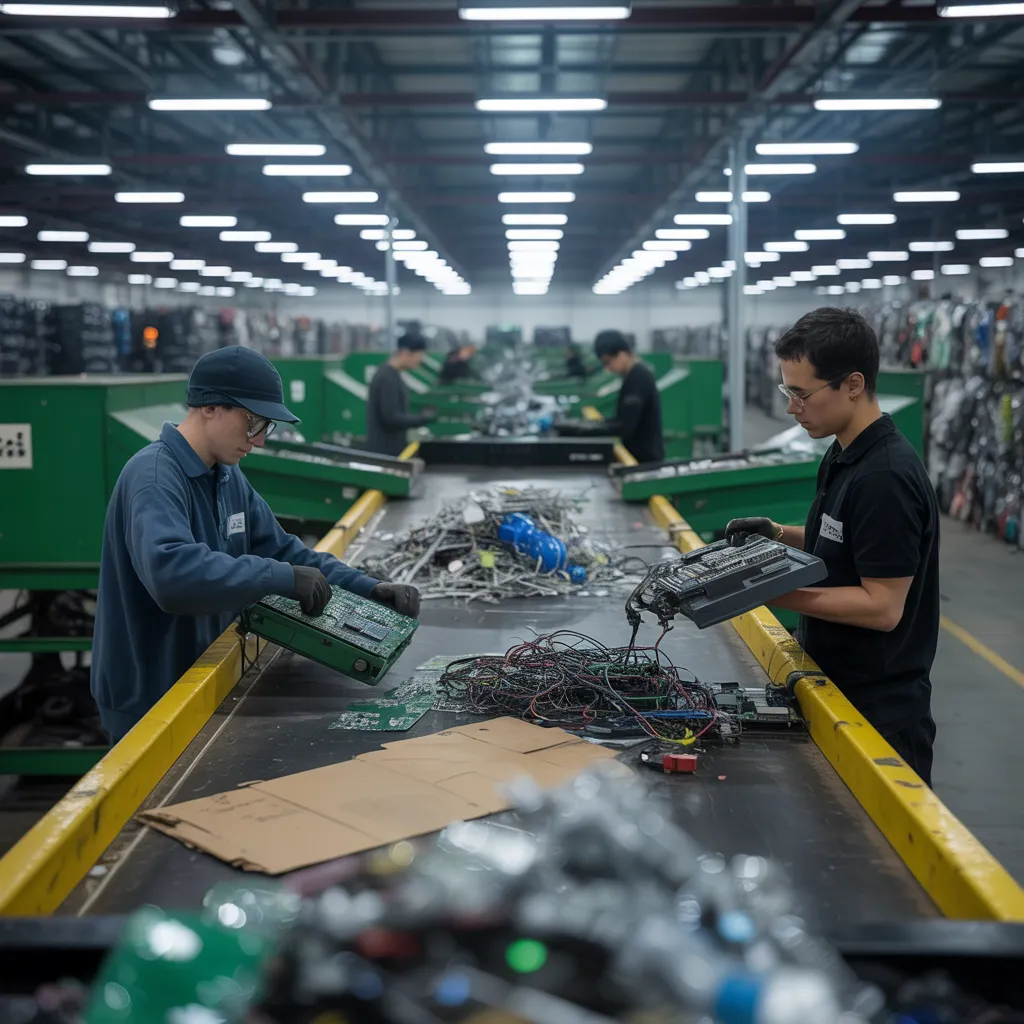
The Growing Challenge of Digital Waste: Comprehending the Issue
With the rapid advancement of technology, the issue of electronic waste, commonly referred to as e-waste, has escalated into a significant global crisis. Countless tons of unwanted electronic devices, such as smartphones, computers, and appliances, are created each year, contributing to environmental degradation. Many consumers are unaware of the dangerous substances contained in these devices, including cadmium, lead, and mercury, which can contaminate soil and water sources, creating significant health hazards.
The inappropriate discarding of e-waste frequently results in unofficial recycling procedures, where unregulated workers take apart electronic devices without adequate safety measures. This not only exacerbates the health risks but also compromises efficient recycling initiatives. Worldwide, only a small portion of e-waste is properly recycled, highlighting a critical gap in awareness and infrastructure. Resolving this challenge necessitates a collaborative effort from governments, industries, and consumers to promote responsible disposal and enhance recycling systems, guaranteeing a greener and more sustainable tomorrow.
Financial Advantages: How E-Waste Recycling Generates Employment
E-waste recycling considerably contributes to job creation, with research demonstrating growth in employment opportunities in this sector. It also fosters skill development, equipping workers with valuable expertise in technology and environmental management. Additionally, the expansion of recycling centers can boost local economies, attracting investment and advancing community progress.
Employment Generation Data
Electronic waste recycling is capable of creating countless job opportunities in multiple industries. A study conducted by the Global e-Sustainability Initiative estimates that for every role established in e-waste recycling, no fewer than 1.17 supplementary jobs are produced in connected fields, including logistics and manufacturing. Moreover, the U.S. Environmental Protection Agency anticipates that increasing recycling efforts may generate roughly 1.17 million new positions by 2030. Such roles span from gathering and handling to restoring and remarketing refurbished electronics. Additionally, regional economies gain advantages as these positions frequently offer above-minimum-wage compensation while fostering community involvement. As a result, the e-waste recycling field acts as a powerful engine for employment growth, advancing eco-friendly initiatives while tackling environmental challenges.
Professional Growth Opportunities
Committing to e-waste recycling not only resolves environmental challenges but also cultivates significant skill development prospects. The sector necessitates a diverse range of capabilities, from specialized knowledge in breaking down electronic devices to knowledge of environmental regulations. Workforce development programs can provide workers with essential skills, boosting their job readiness in a rapidly expanding industry. Moreover, collaborations with academic organizations can facilitate hands-on learning experiences, bridging the gap between theoretical understanding and real-world implementation. As workers develop expertise in areas such as electronics repair, digital data restoration, and hazardous material handling, they help build a more green economy. In the end, these workforce training programs strengthen workers while advancing the broader development and progress within the electronic waste management industry.
Local Economic Advancement
Processing e-waste not only enhances skill development but also stimulates local economic growth by generating a wide range of employment opportunities. The e-waste recycling industry demands a varied labor pool, from technicians to logistics personnel, thus creating jobs at multiple skill levels. Area enterprises profit from rising demand for solutions involving e-waste gathering, handling, and redistribution of reconditioned goods. This dynamic cultivates entrepreneurial spirit, as innovative enterprises develop to address the increasing requirements of the field. Additionally, the economic stimulation contributes to higher tax revenues for municipalities, allowing for renewed investment in public services. With sector growth comes greater innovation in waste processing technologies, further enhancing local economic resilience and sustainability. Overall, e-waste recycling serves as a catalyst for extensive local economic growth.
Innovative Technologies Reshaping E-Waste Recycling
Cutting-edge technologies are revolutionizing the electronic waste recycling industry through cutting-edge sorting technologies and automated workflows. Such advancements improve effectiveness and consistency in reclaiming useful components from electronic waste. The integration of robotics further streamlines processes, minimizing operational costs and environmental consequences.
Advanced Separation Techniques
Reshaping the e-waste recycling industry, cutting-edge separation methods harness groundbreaking technologies to effectively recover valuable materials from discarded electronics. Techniques such as hydrometallurgy, pyrometallurgy, and sophisticated mechanical methods enable recyclers to reclaim metals like gold, silver, and copper with remarkable exactness. In addition, the use of sensor-driven classification systems allows for the quick detection of various materials, enhancing the accuracy of separation. These technologies not only minimize waste but also considerably diminish the environmental impact associated with traditional recycling methods. By optimizing the recovery of precious resources, advanced separation techniques support a circular economy, advancing sustainability and resource conservation. Ultimately, these developments strengthen the economic viability of e-waste recycling, establishing career possibilities while encouraging innovation in the sector.
Robotics and Automation Integration
Embedding automated technologies and robotics into electronic waste processing revolutionizes the efficiency and effectiveness of resource recovery. Automated solutions can quickly identify and sort various Try it free materials, significantly minimizing human labor and limiting human error. State-of-the-art robotic systems powered by AI technology improve the accuracy of breaking down complex electronics, allowing for greater recovery rates of valuable components such as precious metals and circuit boards. This technological integration not only hastens the material recycling process but also reduces overall operational expenses, making e-waste recycling more cost-effective. Furthermore, automated systems support improved workplace safety by decreasing human exposure to hazardous materials. As such technologies advance, they are poised to drive advancements in recycling techniques, promoting a more sustainable approach to e-waste management and resource recovery.
How E-Waste Recycling Promotes Sustainability
As e-waste keeps building up around the world, the importance of recycling emerges as a essential solution for advancing sustainable practices. E-waste recycling minimizes environmental harm by preventing toxic substances from reaching landfills, thereby reducing soil and water contamination. By retrieving useful metals and materials, recycling helps conserve natural resources, minimizing the demand for new material extraction. This process not only cuts energy demands but also lessens greenhouse gas emissions connected to the creation of new manufactured items.
Additionally, e-waste recycling encourages a sustainable economic model, promoting material reuse and increasing the lifespan of digital devices. This shift helps to mitigate the negative impacts of fast-paced technological advancement and consumer-driven waste. When organizations and communities adopt e-waste recycling, they work toward a greener tomorrow, advancing the vitality of our natural environment while promoting responsible consumption practices. As a result, e-waste management remains a vital factor in the effort to achieve long-term sustainability in our rapidly evolving digital landscape.
How Regulations Can Help E-Waste Recycling Efforts
The success of e-waste recycling initiatives copyrights considerably on the adoption of well-designed policies. Governments play a vital role in establishing regulatory frameworks that promote the responsible management and recycling of electronic devices. Measures like extended producer responsibility (EPR) can motivate manufacturers to design products with recyclability in mind, consequently decreasing the volume of e-waste produced. Additionally, financial subsidies for recycling programs can lower barriers for consumers and businesses, fostering increased engagement in recycling programs.
Additionally, public awareness campaigns supported by regulatory frameworks can help communities understand about the ecological and economic advantages of e-waste recycling. Developing clear guidelines for electronic waste collection and handling can boost operational efficiency and confirm that toxic materials are managed responsibly. By building a coherent legislative environment that champions responsible e-waste management, governing bodies can stimulate job creation, foster innovation in sustainable recycling methods, and support environmentally responsible economic growth.
Community Efforts That Enhance E-Waste Recycling's Economic Impact
Community efforts considerably bolster the financial influence of e-waste recycling by encouraging community involvement and consciousness. Efforts such as neighborhood gathering drives and informational seminars not only encourage residents to recycle but also develop a sense of collective accountability. Local organizations often partner with recycling providers, increasing availability and convenience for residents.
Furthermore, these locally organized endeavors can create jobs, from collecting and organizing to managing discarded electronics. By championing eco-friendly methods, communities can invigorate regional economic growth while reducing environmental threats associated with improper disposal.
Additionally, public awareness campaigns can spark innovation by educating communities about new recycling advancements, inspiring local entrepreneurs to discover new business opportunities within the electronic waste industry. Fundamentally, community engagement generates a synergistic effect, enhancing the financial advantages of recycling e-waste and supporting a sustainably focused future.
Questions We Get Asked Often
What Personal Belongings Count as E-Waste for Recycling?
Common personal electronics that are considered e-waste for recycling consist of old smartphones, laptops, tablets, televisions, printers, and other electronic devices. Furthermore, batteries and chargers fall under the category of e-waste and must be disposed of through responsible recycling.
What Are the Proper Ways for Individuals to Dispose of E-Waste
Individuals can responsibly handle e-waste by finding certified recycling facilities, joining neighborhood recycling initiatives, or using brand-sponsored return programs. Performing thorough data erasure prior to disposal is critical for safeguarding personal information.
Do Health Risks Exist When It Comes to E-Waste?
Yes, e-waste presents serious health risks. Contact with hazardous materials, such as mercury and lead, can result in severe health issues, including respiratory problems, nerve damage, and increased cancer risk, particularly for individuals in inadequate disposal settings.
What Are the Ecological Effects of Improper E-Waste Disposal?
Improper e-waste disposal leads to the contamination of soil and water, harming ecosystems. Hazardous materials, including heavy metals, seep into the environment, posing risks to wildlife and human health while furthering extensive environmental deterioration.
How Can Businesses Participate in E-Waste Recycling Initiatives?
Companies can engage in e-waste recycling programs by partnering with certified recyclers, implementing take-back programs, raising awareness among staff and clients, and funding green innovations that encourage accountable e-waste disposal and the recovery of valuable resources from electronic devices.